Recycling Doesn’t Fail Because People Don’t Care It Fails Because Systems Are Designed for Perfect Behaviour
For decades, the waste sector has treated recycling as a communication problem.
If participation is low or contamination is high, the default response is more signage, more campaigns, more education.
But the evidence increasingly points elsewhere.
Insights from WRAP and behavioural change specialist Livvy Drake reinforce a more uncomfortable truth:
Recycling systems fail when they rely on people consistently making the right decision.
Because in reality, people don’t.
They are busy, distracted, habitual and highly influenced by their environment. They follow the easiest path available. They copy what looks normal. They avoid effort.
That is not a flaw. It is simply how human behaviour works.
The implication is significant.
Waste performance is not primarily a people problem. It is a system design problem.
The Hidden Driver of Waste Performance
When you step back, most recycling outcomes are shaped by a small number of factors:
How easy the system is to use
How obvious the right action is
How much effort is required
What behaviour appears normal
Whether the system tolerates or prevents misuse
If any of these fail, performance drops quickly.
This is why the same residents can behave differently in different environments. A person who recycles correctly at home may contaminate in a communal setting, not because they don’t care, but because the system is harder to navigate.
In other words, behaviour is a product of context.
The Industry’s Blind Spot
Most waste systems are built on the assumption that people will read instructions carefully, make the correct choice every time and consistently prioritise recycling over convenience, regardless of context. This expectation is flawed. It treats human behaviour as rational and deliberate, even in environments where time, attention, and motivation are limited.
Behavioural science shows that people rely far more on habits, shortcuts, convenience and visible social norms than on rules, conscious decisions or good intentions.
When systems fail to account for this, they produce what might be called fragile compliance – outcomes that only work when everything goes right. In real‑world settings, that rarely happens.
The Real Lever: Friction
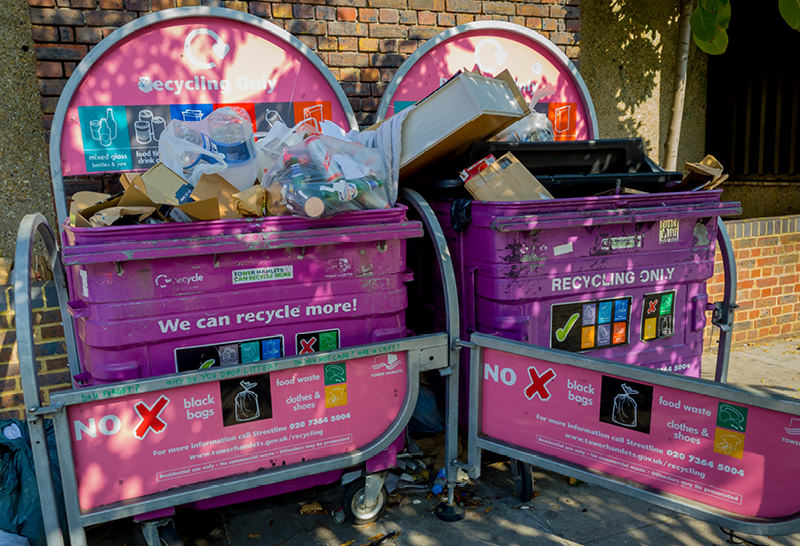
One of the most powerful yet underused levers in waste systems is friction. Small changes in effort can have an outsized impact on behaviour. When recycling requires extra steps, longer distances, or ambiguous decisions, participation drops quickly. Likewise, when contamination is easy – through large open bins, minimal separation or a lack of constraints – it spreads quickly.
But when friction is designed intentionally, the system begins to work with human behaviour rather than against it. Reducing friction for correct disposal while increasing it for incorrect disposal creates clearer signals and better outcomes. This is where meaningful, durable change actually happens.
Infrastructure Is Behaviour Policy
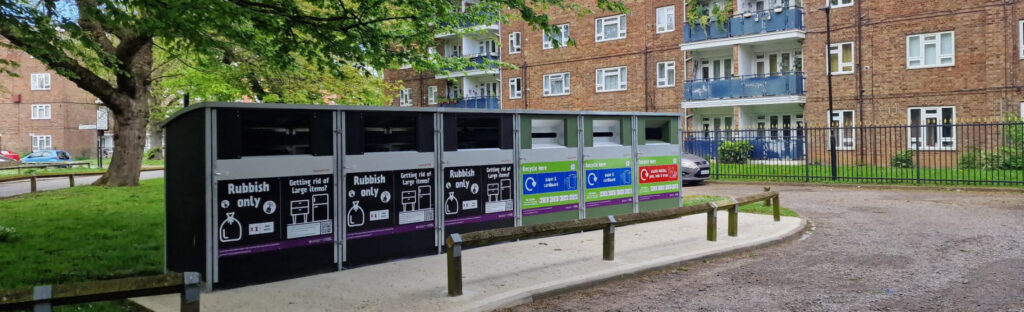
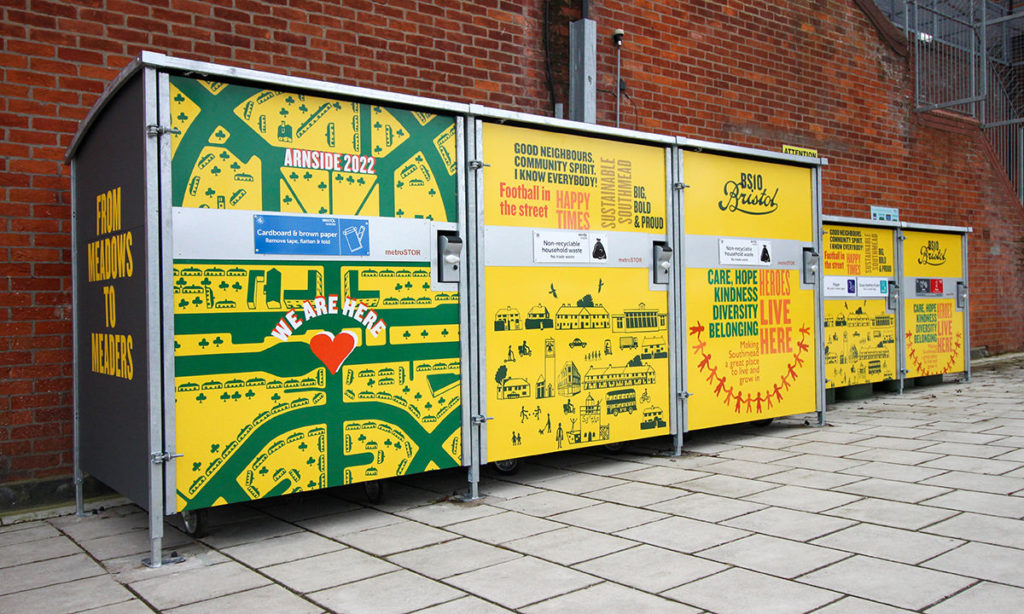
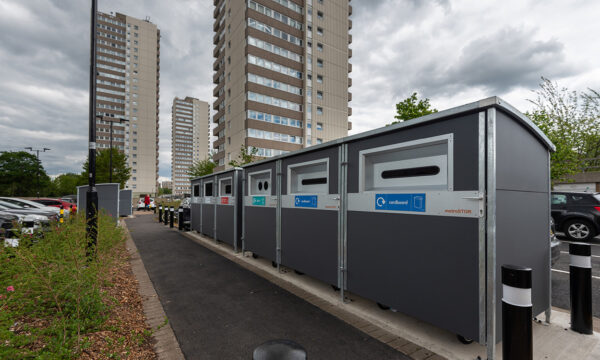
This is the critical shift. Recycling performance is not driven by communication or collection systems alone; it is shaped by the physical environment in which decisions are made. Layout, access, visibility, containment, and control all influence behaviour at the exact moment of disposal.
In that sense, infrastructure is one of the most powerful behaviour‑change tools available. A well‑designed system removes ambiguity, reduces decision-making, reinforces habits, prevents misuse, and clearly signals what “normal” looks like. A poorly designed system does the opposite – and no amount of messaging can fully compensate for that.
Why Communal Environments Are Hardest
This is particularly relevant in:
Multi-family housing
Public spaces
High-density urban environments
In these settings ownership is shared, accountability is diluted, visibility is high and behaviour is highly contagious. When people see contamination, dumping, or misuse, it quickly becomes normalised. Behaviour spreads, not through instruction, but through observation.
As a result, one contaminated bin can trigger more, and a single instance of dumping can cascade into wider failure. This is where traditional, instruction‑led approaches struggle most, and where infrastructure‑led solutions become essential.
From “Encouraging” to “Enabling”
The industry has traditionally focused on encouraging better behaviour through messaging and appeals to intention. But a far more effective approach is to enable the right behaviour through design. When systems are built so that correct disposal is intuitive and incorrect disposal is difficult, outcomes improve without demanding constant attention or perfect choices from users.
This shift is not about forcing behaviour. It is about removing unnecessary decision‑making and embedding desired actions directly into the system itself. By aligning infrastructure with how people naturally act, behaviour change becomes the default rather than the exception.
A More Robust Model for Waste Systems
The strongest-performing systems tend to share common characteristics:
1. Clarity Residents immediately understand what to do.
2. Convenience The right option is the easiest option.
3. Consistency The system behaves the same way every time.
4. Control Misuse and contamination are physically limited.
5. Feedback The environment reinforces positive behaviour.
These are not communication tactics. They are design principles.
The Strategic Opportunity
This shift creates a clear opportunity.
As regulation tightens, costs rise and expectations increase, local authorities and housing providers are under pressure to deliver better outcomes with more complex waste streams.
At the same time, relying on behaviour change alone is proving insufficient.
The organisations that will lead in this space are those that recognise: | Waste diversion is not just a service challenge. It is an infrastructure challenge.
And more specifically: It is a behaviour design challenge delivered through infrastructure.
The metroSTOR Perspective
At metroSTOR, this is the lens through which we approach waste systems.
Not as isolated products or bin stores, but as part of a broader system that shapes behaviour.
…the goal is to reduce reliance on individual decision-making and create environments where the right behaviour happens more consistently.
Because ultimately: The most effective recycling systems are not those that ask more of people – but those that require less from them.
Closing Thought
People will always take shortcuts, follow the easiest available path, and be influenced by what they see around them. These tendencies are consistent, predictable, and deeply human.
The real question, then, is not how to change behaviour itself. It is whether our systems are designed to work with these realities, or to work against them.
This file is currently not available for download.
Get a Quote - metroSTOR UK
We use cookies to ensure that we give you the best experience on our website. If you continue to use this site we will assume that you are happy with it.
To provide the best experiences, we use technologies like cookies to store and/or access device information. Consenting to these technologies will allow us to process data such as browsing behavior or unique IDs on this site. Not consenting or withdrawing consent, may adversely affect certain features and functions.
Functional
Always active
This enables us to personalize our content for you, greet you by name and remember your preferences
Preferences
The technical storage or access necessary for the legitimate purpose of storing preferences that are not requested by the subscriber or user.
Analytical/performance cookies
They help us track visitor numbers and understand how users navigate our site, allowing us to improve its functionality and ensure users find what they need easily.The technical storage or access that is used exclusively for anonymous statistical purposes. Without a subpoena, voluntary compliance on the part of your Internet Service Provider, or additional records from a third party, information stored or retrieved for this purpose alone cannot usually be used to identify you.
Marketing
The technical storage or access is required to create user profiles to send advertising, or to track the user on a website or across several websites for similar marketing purposes.