As e-bikes, mobility scooters and other lithium-ion devices become more common in social housing, the question for many providers is no longer whether the risk is real, but what reasonable action looks like in practice.
Lithium-ion battery fires can develop rapidly, producing intense heat, toxic smoke and fast fire spread. For landlords, the challenge is how to respond in a way that is proportionate, practical and defensible, while also recognising the realities of resident need, accessibility and day-to-day enforcement.
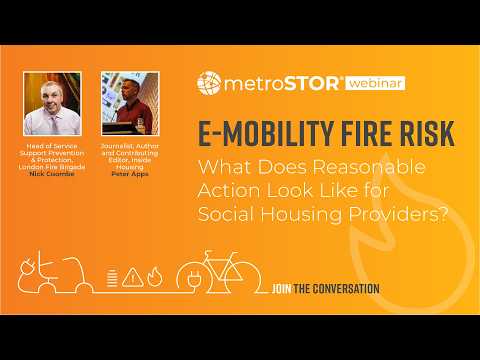
This webinar will explore the growing fire risk associated with e-mobility devices in social housing and examine how providers are beginning to respond. Drawing on insights from the London Fire Brigade and wider sector practice, the session will look at the risks, the grey areas and the emerging frameworks shaping decision-making.
About the event
Date: Wednesday 3rd June 2026
Time: 11:00am – 12:30pm
What the webinar will cover
The reality of lithium-ion battery incidents
Lithium-ion battery fires behave differently from typical domestic fires. They can escalate quickly, burn intensely and may re-ignite after the initial event. This session will explore the particular risks linked to e-bikes, mobility scooters and similar devices in residential settings, including charging, storage and use in or near escape routes.
Why this is such a difficult issue for housing providers
Social landlords are having to balance resident safety, legal duties, operational practicality and accessibility considerations. Responsibilities in communal areas may be more straightforward, but the picture is often less clear inside residents’ homes, especially where a mobility device is essential to independence or daily life.
What proportionate action looks like in practice
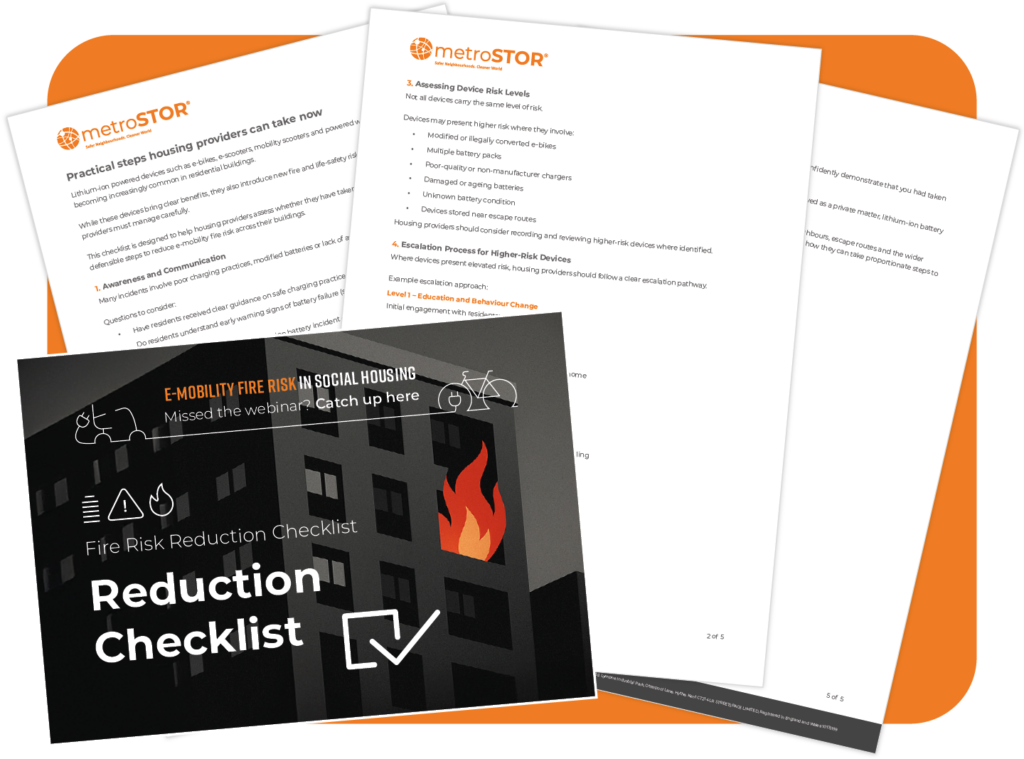
The webinar will examine the practical steps providers are beginning to take, including approaches to policies, charging, storage, escape routes, resident communication and risk assessment. It will focus on what may be considered reasonable and defensible, rather than theoretical best practice alone.
The operational and policy questions providers are now facing
From charging in communal areas and blocked corridors to unsuitable batteries, mismatched chargers and enforcement challenges, the session will explore the real-world decisions landlords are making and where current thinking is starting to develop.
About the speakers:
Nick Coombe MBE
Head of Service Support Prevention & Protection, London Fire Brigade
LinkedIn: Nick Coombe MBE
Nick brings frontline and strategic insight into the risks associated with lithium-ion batteries and personal mobility devices. In this session, they will share perspectives on how battery fires are presenting in residential settings, the factors that increase risk, and the practical considerations housing providers should be aware of when reviewing current arrangements.
Pete Apps
Journalist, Author and Contributing Editor, Inside Housing
LinkedIn: Pete Apps
Pete Apps is one of the UK housing sector’s most respected journalists on building safety and the Grenfell Tower tragedy. Drawing on his reporting and his book Show Me the Bodies: How We Let Grenfell Happen, Pete will explore what Grenfell changed about accountability, foreseeable risk and the danger of relying on hope where clear action is needed. He will also highlight some of the practical steps landlords are now taking to reduce e-mobility fire risk.
Nigel Deacon
Business development Director, metroSTOR
LinkedIn: Nigel Deacon
Nigel will chair the discussion and draw out the key issues for social housing providers, including the policy questions, operational realities and practical steps emerging across the sector.
Who should attend:
This webinar is for:
- Housing associations
- Local authority housing teams
- Building safety leads
- Asset and compliance teams
- Neighbourhood and tenancy teams
- Fire safety and risk professionals
Why attend:
Attend to gain a clearer view of:
- How to think about resident safety, accessibility and enforceability together
- How lithium-ion battery risks are presenting in social housing
- Where provider responsibilities are more or less clear
- What practical, proportionate action may look like now