Client: Sheffield City Council
Location: Sheffield, UK
Application: High-rise residential waste and recycling infrastructure
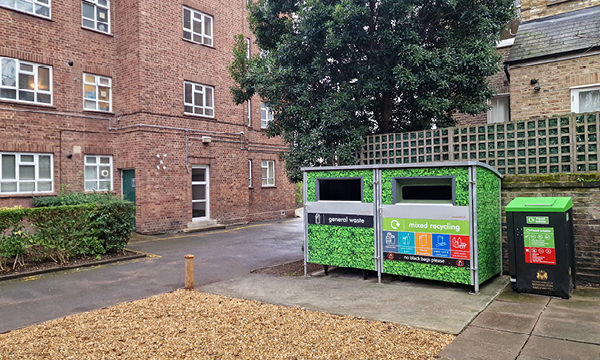
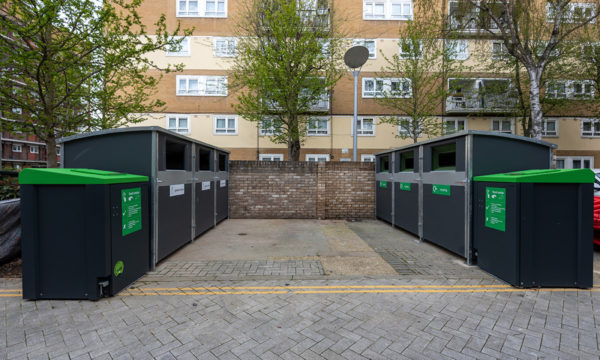
Product Solutions: External communal waste and recycling bin enclosures
Moving on from an ageing refuse chute system
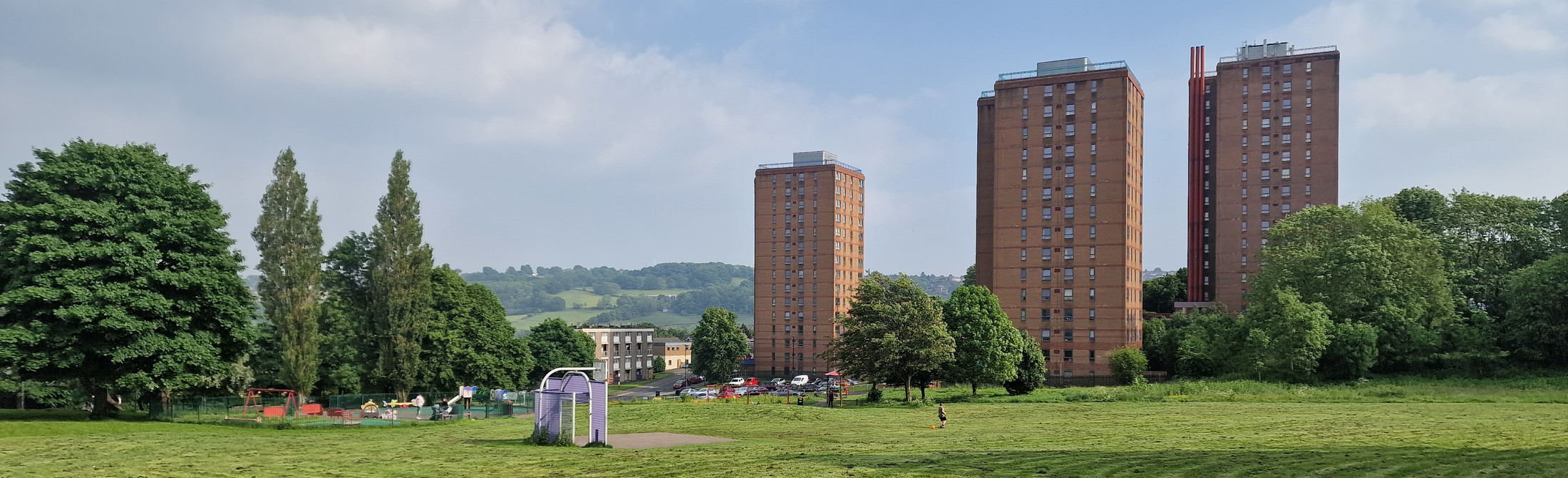
Sheffield City Council manages 24 tower blocks across the city, many built in the 1960s and still relying on their original internal refuse chute systems.
Those chutes were designed for a very different pattern of household waste. Small bags from kitchen pedal bins have increasingly been replaced by larger refuse sacks, which along with pizza boxes and growing volumes of cardboard packaging leads to persistent blockages and significant demands on estate teams.
At the three Deer Park tower blocks alone, the Sheffield estates team recorded 224 chute blockages in the year before closure. Based on around two hours to clear each blockage, that represented approximately 64 working days – more than 12 working weeks – spent dealing with blockages at just three buildings.
There were other problems too. Residents reported smells and noise from the chutes, while food waste trapped inside contributed to problems with flies. Bags that could not be put down the chutes were sometimes left on communal landings, affecting cleanliness and creating an additional fire risk.
Externalising waste as part of wider building safety improvements
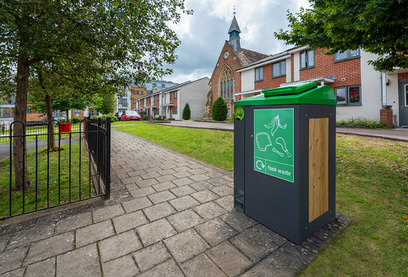
The first chute closures took place at three towers at Deer Park and one at Hanover in the city centre, as part of a wider £7 million programme of fire safety works completed in July 2024. The Sheffield project team worked with metroSTOR to create new external waste and recycling facilities to replace the internal arrangements.
Getting the location right was an important part of the process. The council and metroSTOR considered the balance between general waste and recycling capacity alongside resident walking routes, lighting, cleaning, groundwork and collection access for Veolia.
Different sites needed different solutions. At the city-centre Hanover block, for example, the facilities had to be located within the car park, meaning consideration needed to be given to safe pedestrian access, parked vehicles and whether residents would feel comfortable using the facilities after dark.
Client Feedback
Different sites needed different solutions. At the city-centre Hanover block, for example, the facilities had to be located within the car park, meaning consideration needed to be given to safe pedestrian access, parked vehicles and whether residents would feel comfortable using the facilities after dark.
Dean Butterworth
Then Head of Service, September 2024
Giving residents time to adapt
Closing a chute can represent a big change for somebody who may have lived in a tower block for 20 or 30 years, so the Council carried out Equality Impact Assessments to understand who might be particularly affected by the change, while residents were kept informed through newsletters and face-to-face events. Waste support officers were also available on site to answer questions and address concerns.
Rather than switching from one system to the other overnight, the project team introduced a four-week transition period. The new external facilities were made available while the chutes remained open, giving residents time to get used to a different way of disposing of their waste.
Despite some understandable concerns at the beginning, the council found that residents adapted better than expected. Sheffield had anticipated that bags might continue to be left where the old hopper heads had been, but in practice this happened far less than expected.
Blockages disappeared – without increasing the workload
The change has removed some of the most time-consuming problems associated with the old system, because there are no longer any chute blockages to deal with at the four towers and no requirement to rotate the bins beneath the chutes. There is also less waste left on internal landings, where estate staff had previously needed to walk every floor checking for discarded bags.
The external facilities still need managing, particularly after busy weekends, but Sheffield reports that overall, the change has not increased the estate management workload. For the three Deer Park towers, that means a problem which had generated 224 reported blockages and consumed the equivalent of more than 12 working weeks in a single year has effectively been designed out.
Client Feedback
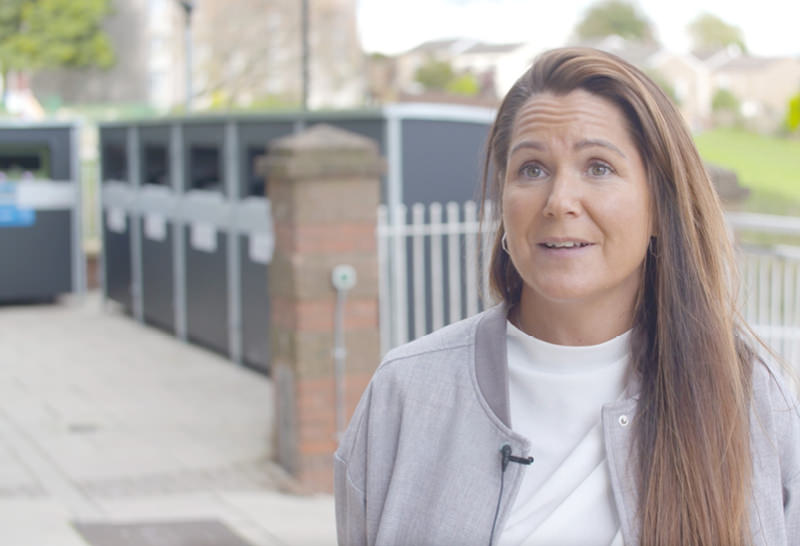
On the whole, there’s less waste left on internal landings, there are no longer any blockages in those tower blocks to deal with and no need to rotate the bins. We’ve had to change how we do things slightly differently, but on the whole, it’s not increased the workload at all.
Helen Scott
Head of Estates & Environmental Services – September 2024
Recycling grew enough to need more capacity
Chute closure has also created a much better opportunity for residents to recycle. Several of the blocks previously had no recycling provision. With general waste and recycling now provided externally, Sheffield supported the new arrangements with educational packs, clear signage and appropriately designed apertures to help residents separate materials correctly.
The response exceeded expectations. Sheffield reported a large increase in recycling, with residents using the service sufficiently well that the council identified a need to provide additional recycling capacity.
Client Feedback
We’ve obviously seen a large increase in recycling around the blocks. It’s highlighted that there’s actually a need for more provision. Customers have really got on board and are recycling more, so that’s been a real positive.
Helen Scott
Head of Estates & Environmental Services – September 2024
Learning from the first four towers
The first projects are now helping Sheffield plan a much larger programme. The council intends to close chutes across its remaining 20 tower blocks as part of a wider £45 million high-rise improvement programme.
Those buildings will bring new challenges, including chutes accessed from inside individual flats rather than communal landings. But the first four towers have already provided practical lessons around early planning, resident consultation, accessibility, collection operations and giving people enough time to adjust.
For Sheffield, the experience shows that closing an ageing refuse chute can do much more than remove a maintenance problem or a fire safety risk. When the replacement infrastructure is planned and implemented with careful consideration for the residents who will use it, chute closure can help create cleaner communal areas, reduce operational demands and make it much easier for residents to recycle.