Designing External Works That Are Truly ‘All-Weather’
In recent years, the UK has experienced a growing pattern of weather extremes rather than seasonal variation. The Met Office has confirmed that several of the past few years rank among the wettest on record, with parts of England and Wales receiving well over 1,200 mm of rainfall annually. Storm events have brought sustained high winds, surface flooding and prolonged disruption. While winters grow warmer than in decades gone by, cold snaps repeatedly push overnight temperatures well below freezing in winter months.
External Storage Takes The Brunt
Outdoor storage takes the brunt of this exposure. Unlike internal environments, storage buildings, stores and lockers are subjected continuously to driving rain, wind loading, standing water and repeated freeze thaw cycles. When infrastructure is designed only to cope with average conditions, weaknesses emerge quickly with distortion or degradation, drainage issues and access routes compromised. The result is accelerated wear, loss of usability, increased maintenance demand and reduced confidence in the space.
Design Considerations
Structure
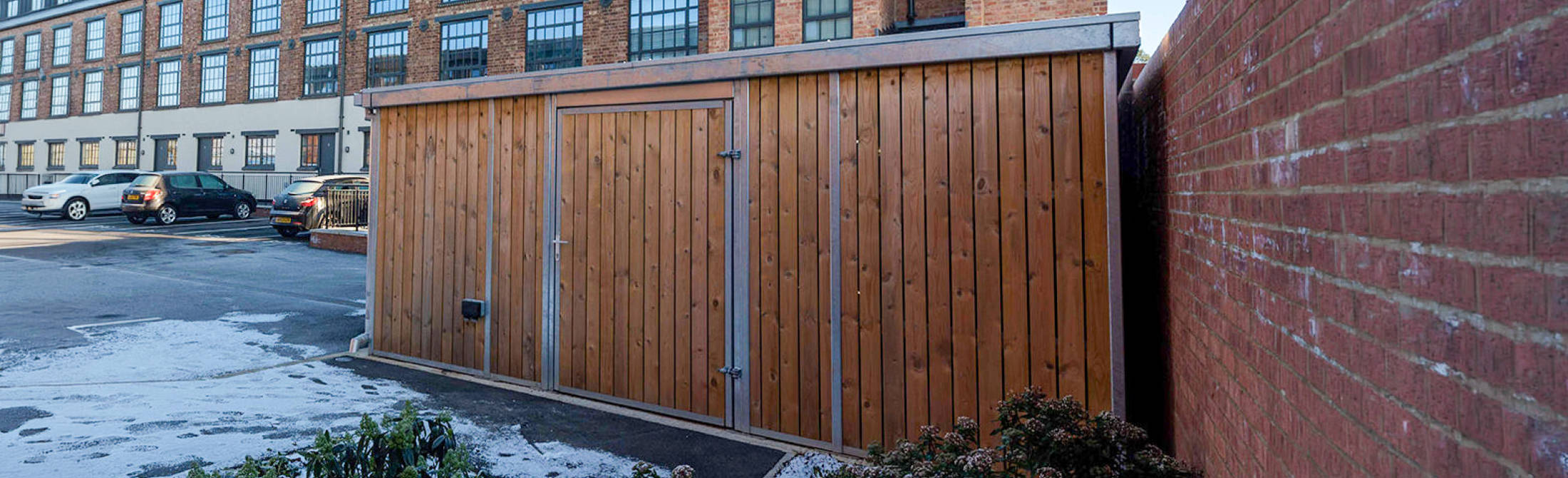
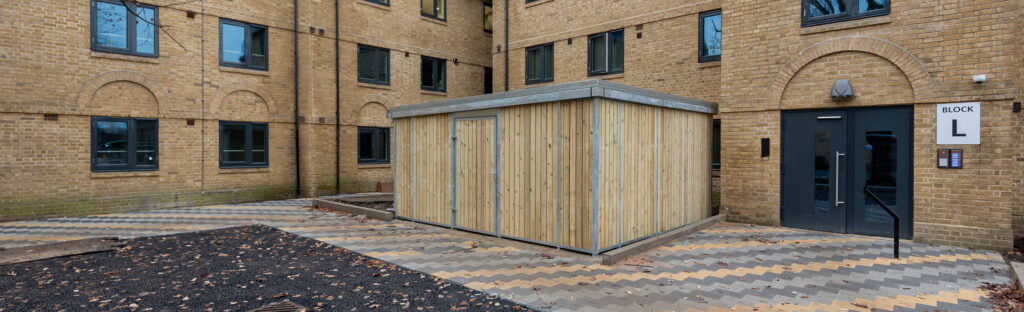
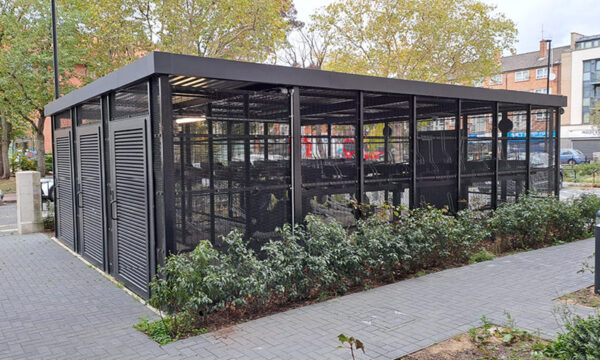
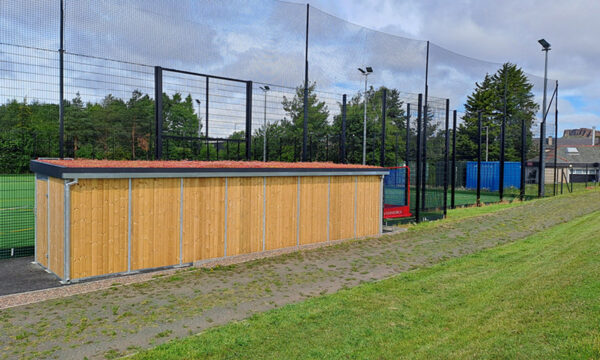
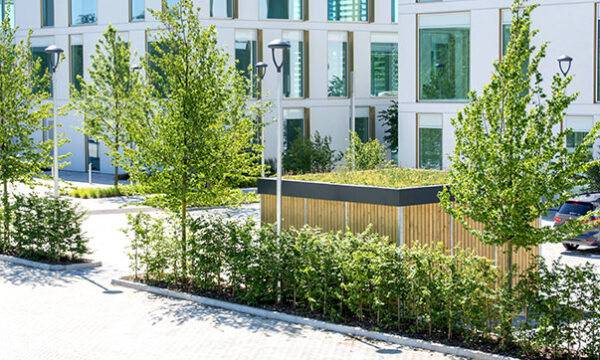
Designing external storage that continues to perform in these conditions mean that structure, enclosure, drainage and access must be considered together. Robust steel frame construction helps maintain alignment and performance over time, whilst roof design becomes a critical factor. It has the ability to manage water effectively and accommodate lightweight green roof systems, supporting both weather resilience and wider environmental objectives.
Material
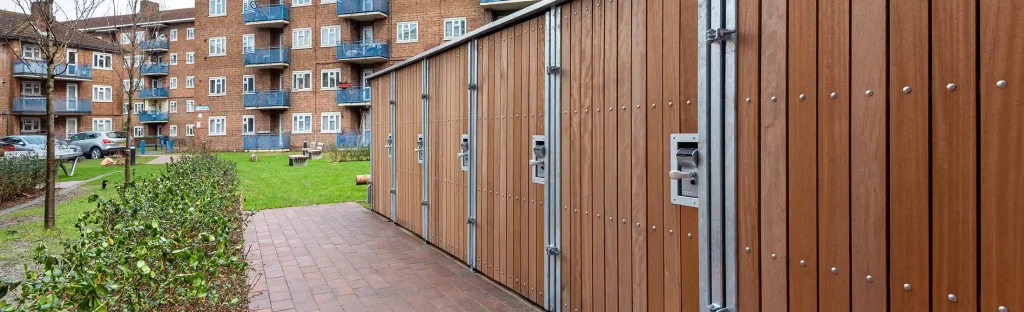
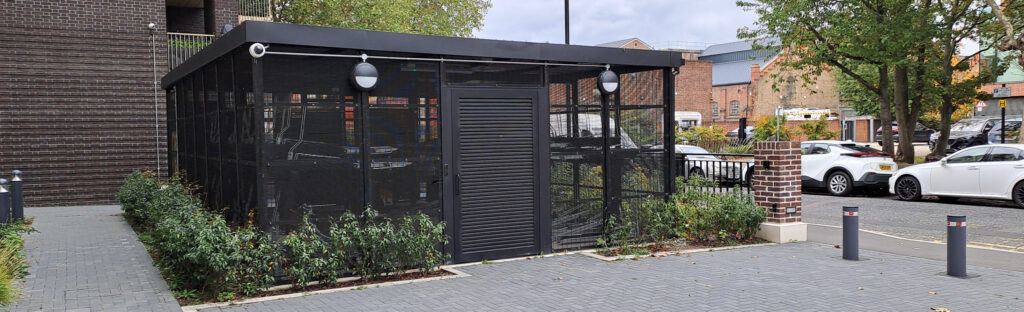
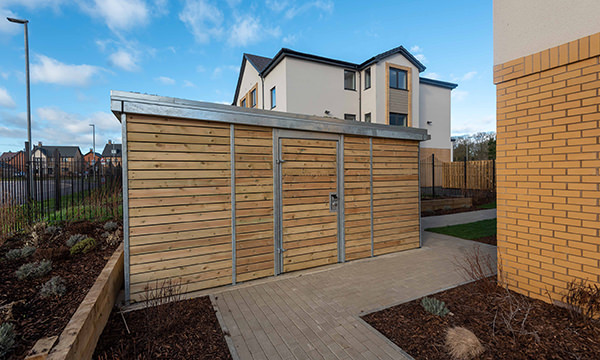
Material choice and finish play a defining role in long term performance. Galvanised or powder coated steel frames, combined with durable external panels in timber or steel, help structures withstand moisture, temperature change and repeated use, without accelerated degradation. The ability to coordinate finishes and enclosure types across a site supports visual consistency, while reducing the complexity that can arise when external works are specified in isolation.
Security
Security and resilience are closely linked. External storage that protects its contents from weather but fails under attempted theft, or vice versa, does not perform its role fully. Integrating security specifications into the core design, allows access control and recognised certification standards to be met without compromising usability or appearance. This approach is particularly important in exposed locations.
Specification
There is also a practical specification benefit to systems that balance standardisation with flexibility. Clear technical information, supported by downloadable CAD models, allows external storage to be properly integrated into wider external works and landscape design from an early stage. This reduces late-stage compromise and helps ensure that performance in extreme conditions has been considered alongside everyday use.
As expectations around safety, sustainability and long-term value continue to rise, external works can no longer be treated as secondary. External storage buildings are part of how a site functions throughout the year, particularly when conditions are least forgiving.
This file is currently not available for download.
Get a Quote - metroSTOR UK
We use cookies to ensure that we give you the best experience on our website. If you continue to use this site we will assume that you are happy with it.
To provide the best experiences, we use technologies like cookies to store and/or access device information. Consenting to these technologies will allow us to process data such as browsing behavior or unique IDs on this site. Not consenting or withdrawing consent, may adversely affect certain features and functions.
Functional
Always active
This enables us to personalize our content for you, greet you by name and remember your preferences
Preferences
The technical storage or access necessary for the legitimate purpose of storing preferences that are not requested by the subscriber or user.
Analytical/performance cookies
They help us track visitor numbers and understand how users navigate our site, allowing us to improve its functionality and ensure users find what they need easily.The technical storage or access that is used exclusively for anonymous statistical purposes. Without a subpoena, voluntary compliance on the part of your Internet Service Provider, or additional records from a third party, information stored or retrieved for this purpose alone cannot usually be used to identify you.
Marketing
The technical storage or access is required to create user profiles to send advertising, or to track the user on a website or across several websites for similar marketing purposes.