Byker Estate: cleaner communal areas and a big lift in recycling
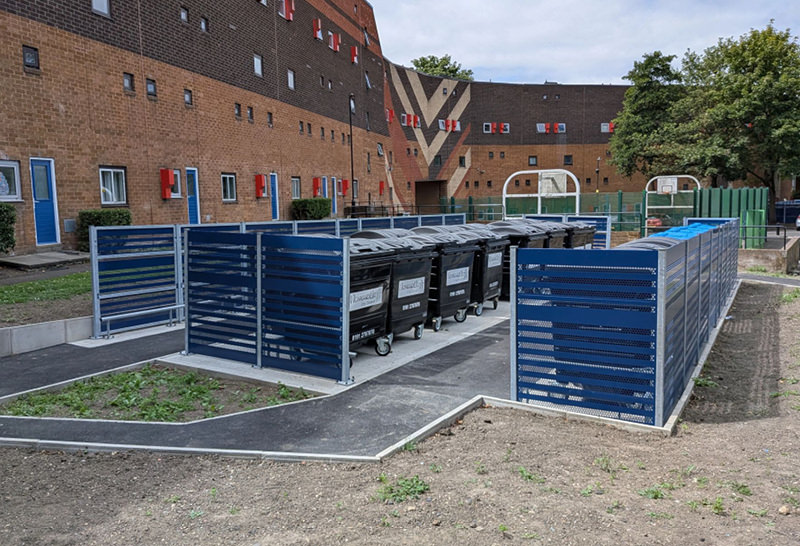
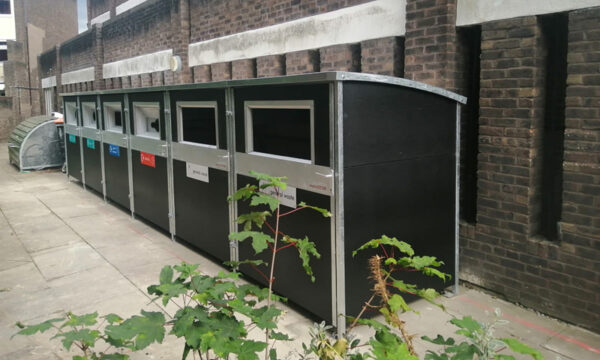
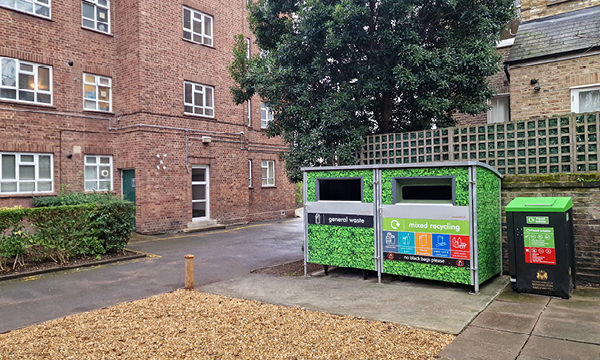
Client: Byker Community Trust / Karbon Homes Location: Newcastle upon Tyne, UK Application: Residential estate waste and recycling infrastructure Product Solutions: Enclosed communal bin stores and screened bin areas
A fresh start for Byker
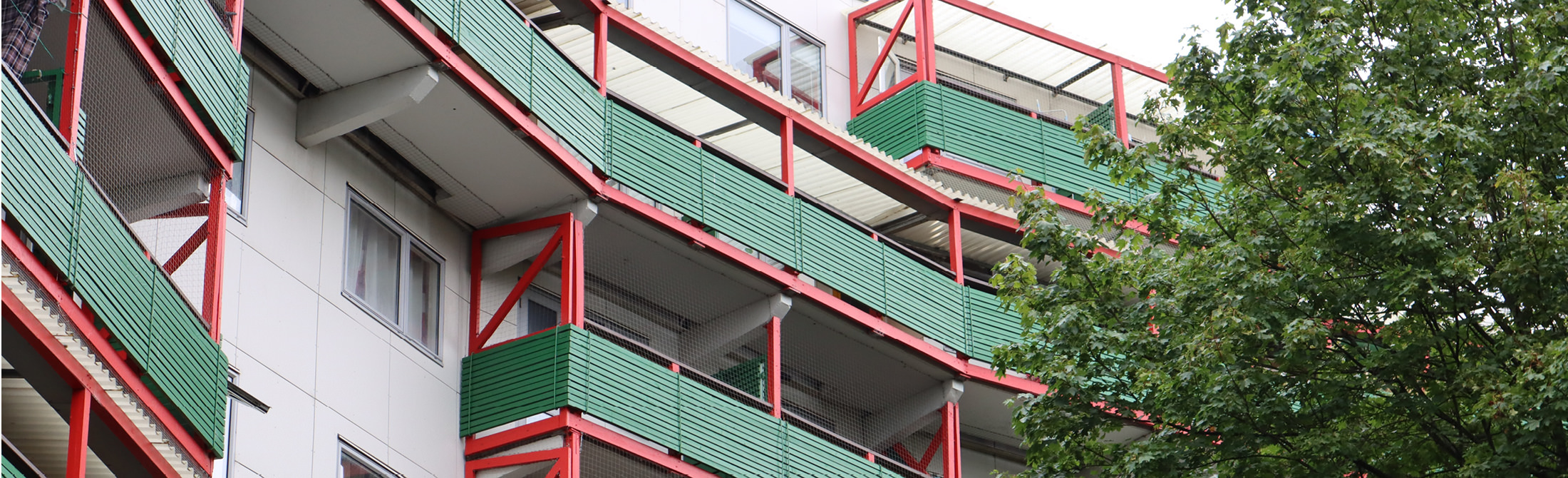
On the Byker Estate, a community of 2,000 households in Newcastle, waste management had become a daily frustration for residents. Litter and fly-tipping were affecting how shared spaces looked and felt, while a lack of recycling and fire safety concerns around the previous bin arrangements added further urgency.
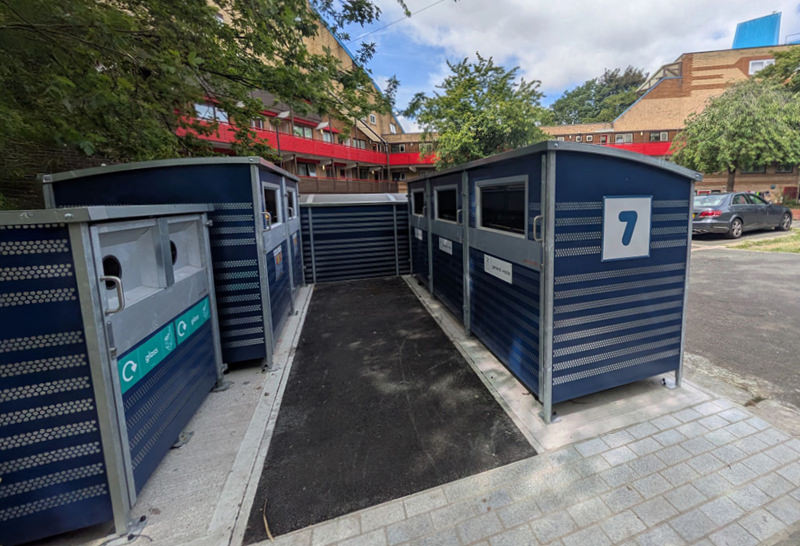
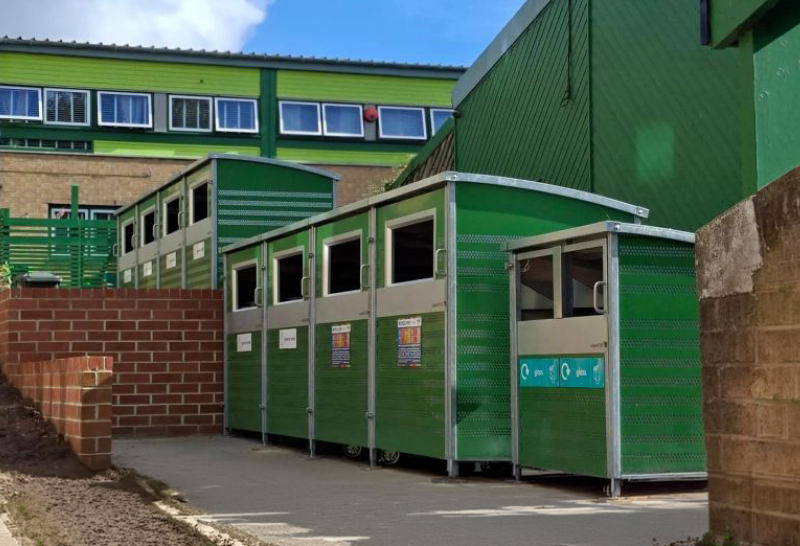
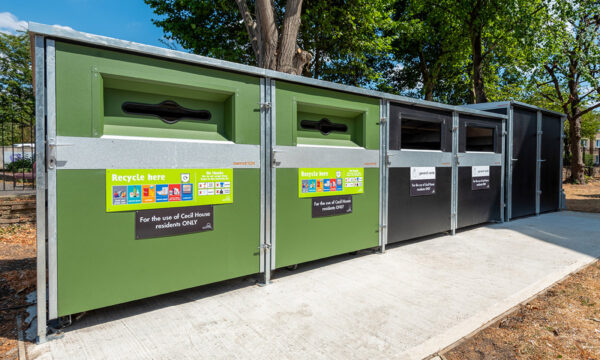
Following consultation with residents, Byker Community Trust launched a trial estate improvement programme in two neighbourhoods, introducing communal bin stores as part of a wider effort to improve conditions across the estate. The goal was to create a waste management system that was easier to use and easier to manage in today’s environment. The pilot included 51 bin enclosures, four open bin areas, upgrades to existing internal bin cupboards, and additional recycling capacity as demand increased.
Why the old system was falling short
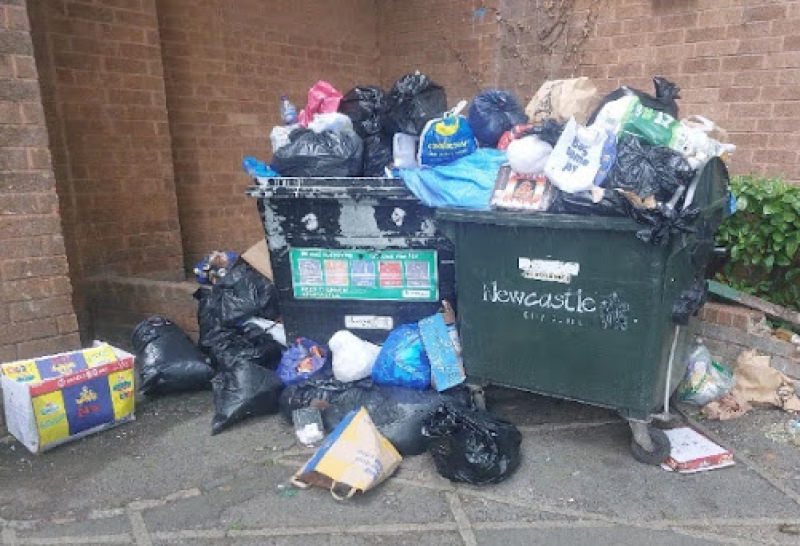
Before the pilot, residents described waste areas as untidy and embarrassing. Overflowing bins, side waste, and fly-tipping had become everyday occurrences, while contamination levels were so high that almost no recycling was being successfully collected. Residents who did try to recycle often felt their efforts were being undermined by those who didn’t bother.
Mark Whittaker of Karbon Homes described just how quickly the old setup was breaking down in practice: “Capacity was a major problem before. Bins could be emptied on a Friday and be overflowing again by Monday, so people left bags in communal areas knowing the concierge team would remove them.”
One of the clearest lessons from the pilot was that this was not simply a behaviour problem. In communal housing, residents are much more likely to recycle when the service is convenient, reliable, and easy to understand.
A pilot designed to learn and adapt
One of the strengths of the Byker pilot was the breadth of measures employed. Alongside the installation of the new communal stores, residents received letters, FAQs on recycling and bulky waste, local maps showing their nearest bin store, and reusable recycling bags with visual guidance on what to recycle. The trust also ran community engagement activity to help residents understand the changes and feel confident using the new system.
Just as importantly, the pilot was treated as a genuine test-and-learn project. Feedback came through doorstep interviews, text surveys, and resident diary research over a three-month period, allowing the team to understand what was working, what was causing friction, and where the service needed to adapt. That real-time learning helped the team protect confidence in the scheme by making changes while the pilot was still live.
That process led to practical refinements during the pilot itself. Apertures were added to help reduce contamination, layouts were adjusted, CCTV was deployed around problem locations, and recycling capacity was increased where demand proved higher than expected. The webinar’s broader lesson was that communal recycling works best when it is actively managed after installation, not treated as a fixed design that never changes.
Recycling rose quickly once obstacles were removed
The clearest sign of progress was the change in recycling performance. In the first six months, the project collected 334,400 litres of recycling, equivalent to 304 full bins. Around 80% of surveyed residents supported the scheme, while 79% said they were recycling.
That surge in demand revealed something important: the real barrier had not been a lack of willingness from residents, but the lack of a system that made recycling straightforward. As Mark Whittaker put it, “We underestimated recycling demand. We started with roughly an 80:20 split between general waste and recycling, but the recycling bins were overwhelmed almost immediately. In future I would start closer to 60:40 or even 50:50.”
The webinar also added a useful design lesson here. Location matters as much as capacity. Residents tended to use the nearest available bin and to dispose of waste and recycling along their normal routes, such as on the way to the shops, the car, or public transport. Enclosed units were generally preferred to open screened areas because they were easier to use and created less friction.
A cleaner estate helped rebuild confidence
The operational improvements mattered, but so did the change in how the estate felt. Residents reported cleaner surroundings, stronger recycling habits, and a more positive day-to-day experience. Some described the change as a “100% improvement,” while the research also noted more positive conversations between neighbours and greater visibility of good recycling behaviour.
Mark Whittaker also pointed to the difference the added capacity and better containment had made on the ground: “In some locations we now have up to five times the previous capacity. That has reduced side waste, litter and vermin problems. The areas look tidier, and resident feedback has been very positive.”
The benefits extended beyond the bin stores themselves. Reduced side waste and lower tipping costs freed up time for estate teams to focus on wider improvements that had previously been pushed back by reactive clean-up work. Between April and December, tipping costs fell by about £5,200, nearly a 50% reduction compared with the same period the previous year.
Michelle Bell, Assistant Director of Byker Community Trust, made clear that the project’s success reflected a shared effort across the community and project partners: “The hard work and dedication of those involved in the project being highlighted by the shortlist is brilliant. We’re very grateful to our community for their dedication to helping us transform the Dunn Terrace and Headlam Green areas of the estate, and hope that this recognition will help us to create further improvement across the estate.”
That momentum was recognised more widely when the project was shortlisted for the CIPR Excellence Awards in the Change Communications Campaign category.
What comes next for Byker
The pilot was but the first step of many. Karbon Homes is now extending the approach across the Byker Wall in phases, using what the project has already taught the team about capacity, location, communications and assisted collections.
A food-waste service will also be incorporated, along with a more proactive response to bulky waste, which while improved, remains an issue across the estate.
Mark Whittaker summed up the wider lesson well: “The project is still evolving, but it has already shown that residents will recycle when the service is convenient and reliable. The most important lesson is that customers are central to the design. They will tell you what will work and what will not.”
For housing providers, that is the real takeaway. Shared waste areas work best when the service is designed around resident routines, practical constraints, and ongoing learning. In Byker, a more thoughtful and responsive approach helped turn a long-running source of frustration into a cleaner, more credible foundation for wider estate improvement.
This file is currently not available for download.
Get a Quote - metroSTOR UK
We use cookies to ensure that we give you the best experience on our website. If you continue to use this site we will assume that you are happy with it.
To provide the best experiences, we use technologies like cookies to store and/or access device information. Consenting to these technologies will allow us to process data such as browsing behavior or unique IDs on this site. Not consenting or withdrawing consent, may adversely affect certain features and functions.
Functional
Always active
This enables us to personalize our content for you, greet you by name and remember your preferences
Preferences
The technical storage or access necessary for the legitimate purpose of storing preferences that are not requested by the subscriber or user.
Analytical/performance cookies
They help us track visitor numbers and understand how users navigate our site, allowing us to improve its functionality and ensure users find what they need easily.The technical storage or access that is used exclusively for anonymous statistical purposes. Without a subpoena, voluntary compliance on the part of your Internet Service Provider, or additional records from a third party, information stored or retrieved for this purpose alone cannot usually be used to identify you.
Marketing
The technical storage or access is required to create user profiles to send advertising, or to track the user on a website or across several websites for similar marketing purposes.