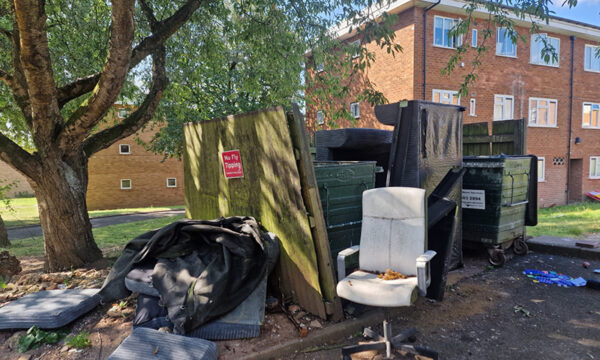
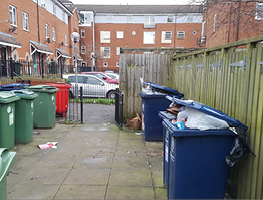
Fly-tipping remains one of the most persistent environmental challenges across the UK. Local authorities in England recorded over 1.15 million incidents in 2023–24, with household waste accounting for more than 60% of all reported cases. Beyond the visual impact, the issue carries significant social and economic consequences, damaging local environments, undermining community pride and costing councils an estimated £83 million annually in clean-up and enforcement.
For architects and specifiers, these figures underline the importance of waste infrastructure as a design responsibility. The physical environment plays a direct role in enabling or deterring fly-tipping. Poorly located, unsecured or insufficient facilities create the conditions for misuse, while well-planned external works can reduce opportunities for illegal dumping and support positive user behaviour.
Designing out opportunities
Design decisions can have a measurable effect on waste management outcomes. Fly-tipping tends to occur where there is poor visibility, insufficient storage capacity or unclear ownership of space. Applying principles from the Secured by Design waste storage guidance helps to reduce these risks.
External storage areas should be located within natural surveillance zones and be easy to access for residents and collection teams. Clear signage, durable materials and consistent visual language reinforce correct use and signal that spaces are cared for and monitored. Incorporating lighting and access control discourages opportunistic tipping and supports safer neighbourhood design.
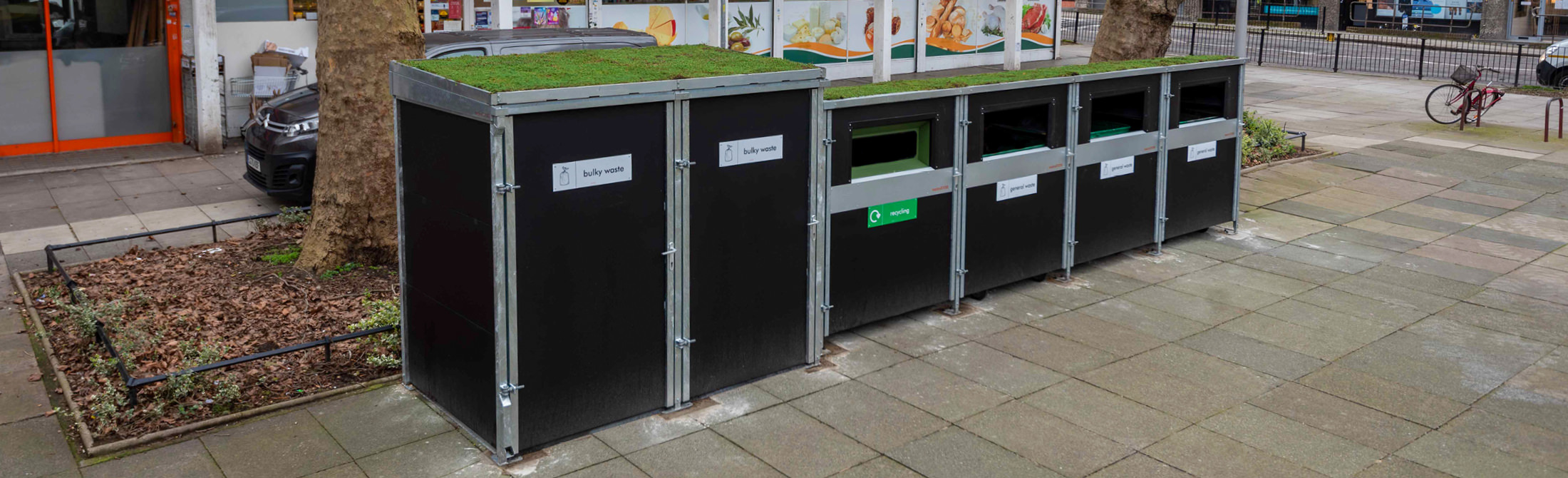
External loading further strengthens these measures by ensuring that waste is deposited from the public side of an enclosure rather than within recessed internal spaces. Orienting apertures outward improves visibility, removes concealed corners and makes correct use the intuitive option for residents. By keeping loading points in open view and clearly defined, this approach reduces ambiguity, side waste and opportunistic dumping, supporting both safer layouts and more consistent day to day performance.Using systems that carry recognised security accreditation strengthens these design measures. Secured by Design principles ensure that bin storage avoids recessed areas, maintains clear sightlines and supports effective access control, while Sold Secure certification provides independent verification that enclosure doors and locking systems resist tampering or forced entry. Together, these standards help ensure that waste areas remain orderly, secure and less vulnerable to misuse.
Integrating infrastructure early
Fly-tipping issues among other negative behaviours, often arise when waste management is addressed late in the design process. Early integration allows sufficient capacity to be planned for all waste streams, including bulky items. It also ensures compliance with planning and fire safety requirements. Locating bin stores, recycling points and bulky waste units within line of sight, rather than in concealed corners or service yards, helps to deter misuse and improve resident engagement.
During the design phase, considering collection logistics, vehicle access and the relationship between waste areas and active frontages can prevent future management issues and reduce the operational burden on landlords.
Specification in practice
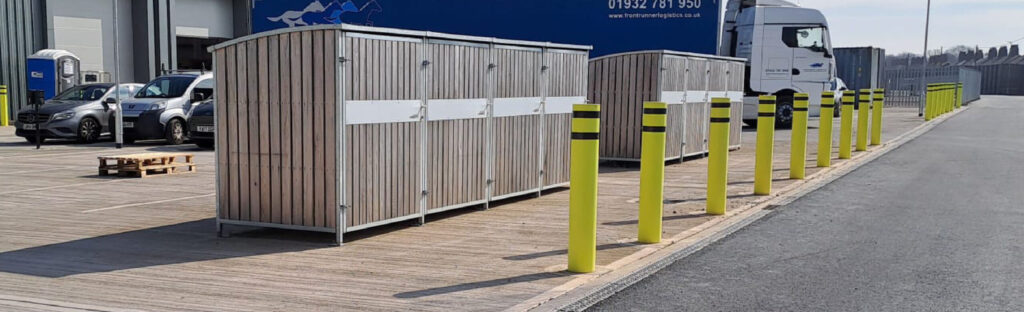
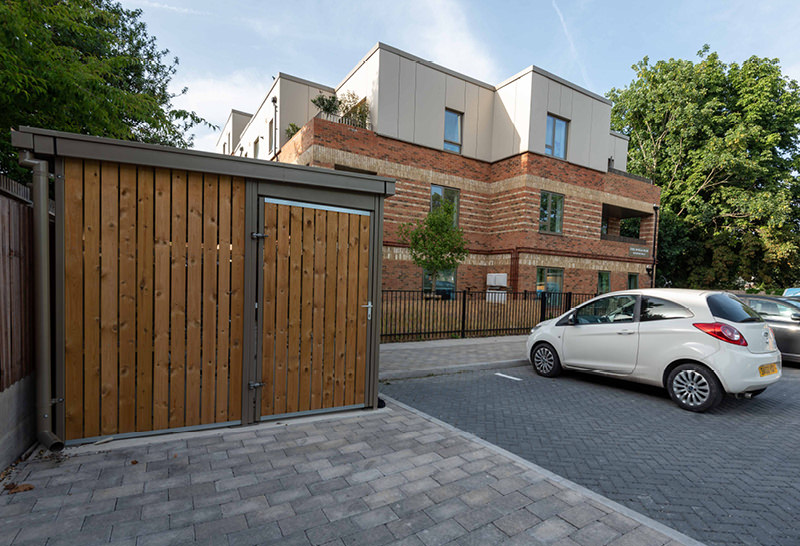
metroSTOR systems provide architects with pre-engineered, regulation-ready solutions for secure waste storage. Factory-built structures in non-combustible materials allow specifiers to meet design intent and statutory compliance with minimal coordination time.
Security accreditation also plays a role at the specification stage, supporting performance in settings where waste areas are vulnerable to misuse. Systems tested to Sold Secure standards and aligned with Secured by Design guidance provide additional assurance that enclosure doors, locking systems and access zones meet recognised benchmarks for reducing unauthorised entry and preventing tampering.
Features include configurable layouts for segregated waste streams, integrated lighting and access control options and compatibility with BIM and NBS workflows. The result is a verifiable approach to external waste infrastructure that supports planning submissions and Building Control requirements.
By specifying secure, well-designed storage, architects can directly reduce the conditions that allow fly-tipping to occur, improving safety and visual quality across communal environments.
Coordinating external works for long-term impact
Designing against fly-tipping forms part of a broader responsibility to create safe, functional and maintainable external environments. metroSTOR’s coordinated approach enables waste and recycling infrastructure to be integrated alongside cycle parking, canopies and street furniture, ensuring visual consistency and simplifying procurement.
With local authorities under pressure to reduce incidents and improve environmental quality, design-led infrastructure offers a practical, long-term solution. Embedding effective waste management into the fabric of developments from the outset helps build cleaner, safer and more sustainable communities.
This file is currently not available for download.
Get a Quote - metroSTOR UK
We use cookies to ensure that we give you the best experience on our website. If you continue to use this site we will assume that you are happy with it.
To provide the best experiences, we use technologies like cookies to store and/or access device information. Consenting to these technologies will allow us to process data such as browsing behavior or unique IDs on this site. Not consenting or withdrawing consent, may adversely affect certain features and functions.
Functional
Always active
This enables us to personalize our content for you, greet you by name and remember your preferences
Preferences
The technical storage or access necessary for the legitimate purpose of storing preferences that are not requested by the subscriber or user.
Analytical/performance cookies
They help us track visitor numbers and understand how users navigate our site, allowing us to improve its functionality and ensure users find what they need easily.The technical storage or access that is used exclusively for anonymous statistical purposes. Without a subpoena, voluntary compliance on the part of your Internet Service Provider, or additional records from a third party, information stored or retrieved for this purpose alone cannot usually be used to identify you.
Marketing
The technical storage or access is required to create user profiles to send advertising, or to track the user on a website or across several websites for similar marketing purposes.