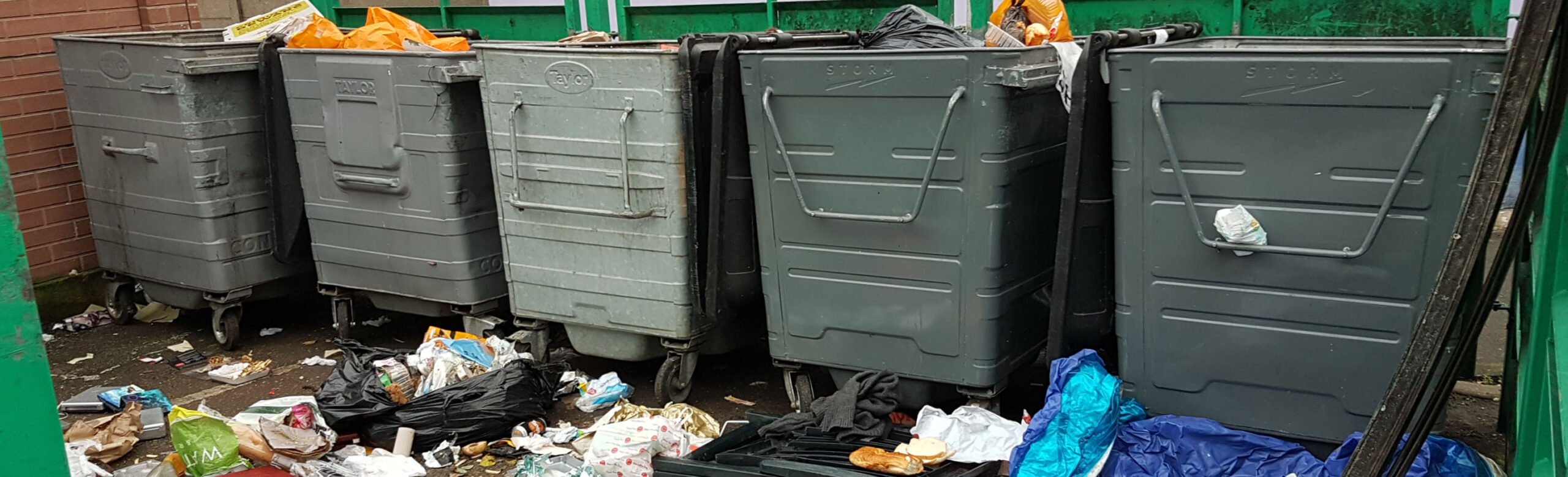
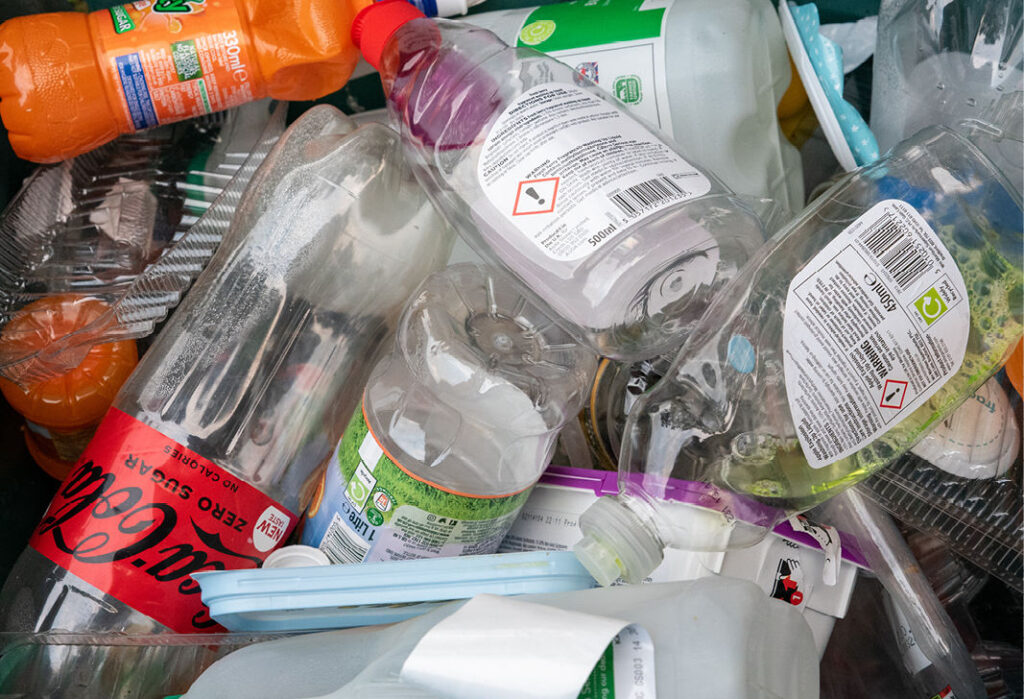
Simpler Recycling is the UK Government’s initiative to make household recycling consistent across the country. From April 2026, every household in England, including flats and communal properties, must receive weekly food waste collections alongside the core dry recycling streams of glass, metal, plastic, paper and card. From 2027, plastic films will also be added. The aim is to make recycling clearer for residents, reduce contamination and boost capture rates.
However, as highlighted in the recent metroSTOR webinar with ReLondon, Simpler Recycling is just one part of a much wider programme of reforms that are reshaping how waste is collected, managed and paid for. To understand what this means for housing providers, it is important to look at the policy drivers behind the changes.
Extended Producer Responsibility (EPR)
Under new regulations, packaging producers are increasingly made financially responsible for the full lifecycle of their materials, including collection, sorting, recycling and disposal. This is the heart of Extended Producer Responsibility (EPR) for packaging. Local authorities and waste services will be funded through this mechanism, but housing providers must ensure their properties can handle more material streams cleanly and reliably.
This means the cost of dealing with packaging waste will increasingly fall on the companies that produce it, not on councils or residents. The fees they pay will vary according to how recyclable their packaging is, with easy-to-recycle materials costing less and hard-to-recycle materials costing more.
Deposit Return Scheme (DRS)
There has also been ongoing discussion around introducing a Deposit Return Scheme (DRS) for drinks containers. Under this approach, consumers would pay a small refundable deposit at purchase, which they could reclaim by returning the container to a collection point. If introduced, it is expected to reduce the number of bottles and cans placed in general waste.
Current government proposals talk of launching the scheme in England, Northern Ireland and Scotland in October 2027, although the details and timeline are still subject to change.
Many countries where similar schemes have been implemented report high recycling rates, significant reductions in litter and stronger progress towards circular economy goals. However, Deposit Return Schemes are not without their challenges, with issues such as littering, rummaging and public safety concerns reported in certain areas.
These experiences highlight the importance of having the right infrastructure and systems in place, so that Deposit Return Schemes deliver their intended benefits without creating new problems. You can find out more about DRS and the challenges they can present, here.
Emissions & Incineration Costs
There is also a live consultation on the UK Emissions Trading Scheme (UK ETS). Proposals suggest that from 2028, sending materials made from fossil carbon, such as plastics, to Energy from Waste plants could incur additional charges. For housing providers, this would mean higher disposal costs where residual bins are contaminated with plastics.
POPs & Bulky Waste Pressures
Regulations concerning Persistent Organic Pollutants (POPs) impose stricter handling and disposal rules for certain types of bulky or hazardous waste (such as treated furniture or large textiles). If full estates don’t have secure infrastructure for holding or managing such items, the legal and financial burden of safe disposal may fall back on providers.
What this means for housing providers
Housing providers that invest now in secure, adaptable and clearly communicated waste systems will be best placed to control costs, improve recycling outcomes and strengthen resident participation as the new framework takes shape.
Housing teams should be prepared for the following:
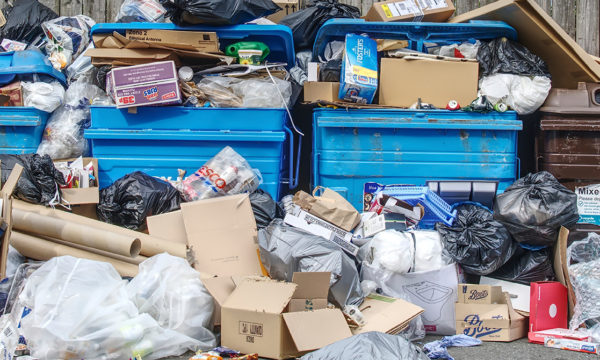
Rising costs if residual fractions remain contaminated
Greater scrutiny of recycling performance as producers, regulators and residents demand cleaner streams
The need to support multiple recyclable streams (glass, plastics, films, food, etc.)
Infrastructure flexibility to adapt as collection scope evolves
Futureproof solutions
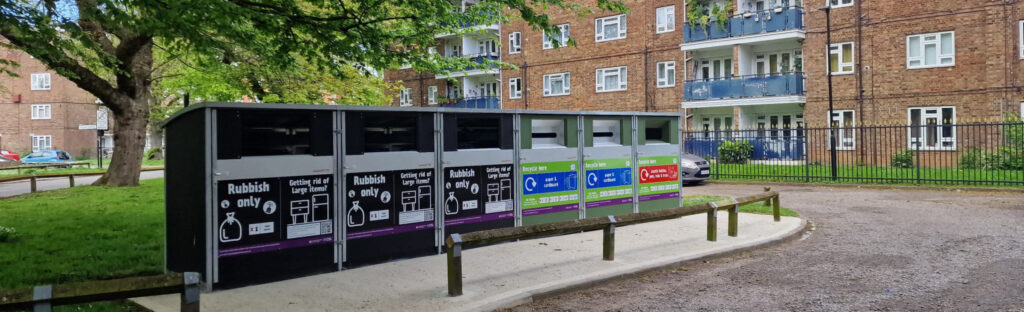
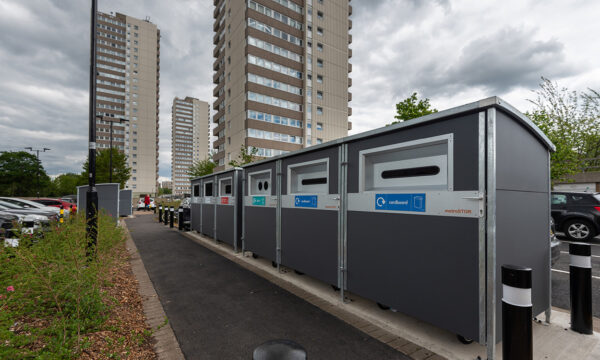
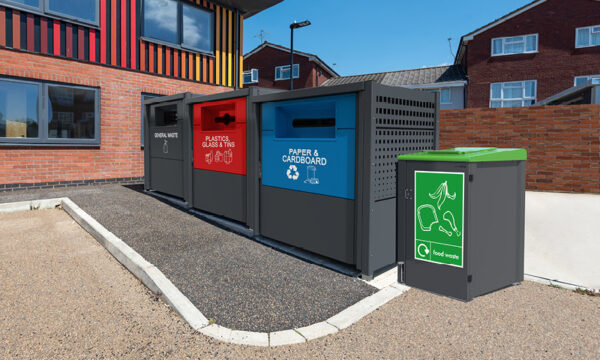
metroSTOR’s solutions are built with these policy pressures in mind. Our robust waste storage housings allow for estates to respond as new materials, such as plastic films are phased into collections and multi-stream apertures are required.
Secure external units protect against contamination and vermin, while fire-rated designs mitigate risk under stricter safety regulation. Clear signage options, combined with durable and low-maintenance structures, reduce the burden on housing teams.
By investing in the right infrastructure now, estates build resilience into their waste operations, positioning themselves to cope with and embrace Simpler Recycling and the next wave of regulatory change.
This file is currently not available for download.
Get a Quote - metroSTOR UK
We use cookies to ensure that we give you the best experience on our website. If you continue to use this site we will assume that you are happy with it.
To provide the best experiences, we use technologies like cookies to store and/or access device information. Consenting to these technologies will allow us to process data such as browsing behavior or unique IDs on this site. Not consenting or withdrawing consent, may adversely affect certain features and functions.
Functional
Always active
This enables us to personalize our content for you, greet you by name and remember your preferences
Preferences
The technical storage or access necessary for the legitimate purpose of storing preferences that are not requested by the subscriber or user.
Analytical/performance cookies
They help us track visitor numbers and understand how users navigate our site, allowing us to improve its functionality and ensure users find what they need easily.The technical storage or access that is used exclusively for anonymous statistical purposes. Without a subpoena, voluntary compliance on the part of your Internet Service Provider, or additional records from a third party, information stored or retrieved for this purpose alone cannot usually be used to identify you.
Marketing
The technical storage or access is required to create user profiles to send advertising, or to track the user on a website or across several websites for similar marketing purposes.